
- Price$$
- Call now

- Price$$
- Call now
- Profile
- Reviews 0
- Contact Us
- prev
- next
- Website
- Bookmark
- Share
- Leave a review
- Claim listing
- Report
- prev
- next
Description
I'll search for information about toroidal transformers from the specified website to write an introductory article.
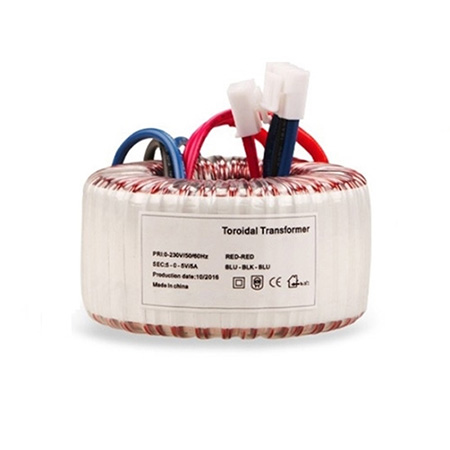
Toroidal transformers represent a significant advancement in power conversion technology, distinguished by their unique doughnut-shaped core that sets them apart from conventional transformer designs. At the heart of this technology lies a circular core, typically constructed from high-permeability silicon steel strips wound into a continuous ring without air gaps. The primary and secondary windings are evenly distributed around this torus-shaped core, creating a configuration that fundamentally transforms how magnetic flux behaves within the device .
The operating principle of toroidal transformers hinges on their ability to create a complete, closed magnetic circuit. Because the core forms a continuous ring, the magnetic flux travels in a uniform path entirely contained within the core material, virtually eliminating flux leakage that plagues traditional EI-type transformers. This design allows the magnetic flux density to reach 1.5–1.8 Tesla, compared to only 1.2–1.4 Tesla in conventional laminated cores, while consuming merely 10% of the no-load current required by traditional alternatives . The result is a device that achieves efficiency levels ranging from 95% to 99%, with core losses accounting for only 10% to 20% of total energy loss compared to 50% in conventional designs .
Manufacturers like steptransformer.com have recognized the substantial advantages of this architecture, offering toroidal transformers ranging from 50 VA to 5000 VA with customizable voltage configurations from 110V to 480V . The company's product line demonstrates the versatility of these components, which can be tailored for applications requiring step-down conversion such as 240V to 12V or control transformer functions at 480V to 120V .
The physical characteristics of toroidal transformers deliver compelling benefits for modern electronic systems. Their compact geometry typically reduces size and weight by 20% to 50% compared to traditional transformers of equivalent ratings, a critical advantage in space-constrained applications . The continuous winding around the core minimizes the length of copper wire required, reducing both winding resistance and associated losses. Mounting is simplified through a single central bolt design that facilitates quick installation and replacement .
Electromagnetic performance represents perhaps the most striking advantage of toroidal construction. The absence of air gaps and the symmetrical winding distribution reduce stray magnetic fields by approximately 8:1 compared to conventional laminated transformers . This containment of magnetic flux makes toroidal transformers inherently self-shielding, eliminating the need for additional electromagnetic interference (EMI) protection that adds cost and bulk to traditional designs . The result is minimal signal distortion and cleaner power delivery—qualities that make these transformers particularly suitable for sensitive electronic equipment.
Acoustic performance further distinguishes toroidal designs. The continuous core construction eliminates the mechanical vibrations and magnetostriction effects that cause the characteristic humming in conventional transformers. This near-silent operation, combined with reduced heat generation due to lower core losses, creates devices well-suited for environments where noise and thermal management are critical concerns .
The application landscape for toroidal transformers spans diverse industries. In audio equipment, they provide clean power to amplifiers and high-fidelity systems where even minor power disturbances can degrade sound quality . Medical devices including MRI machines, X-ray systems, and patient monitors benefit from the low electromagnetic radiation and stable voltage regulation these transformers offer . Renewable energy systems, particularly solar inverters and wind turbine installations, leverage the high efficiency and reliability of toroidal construction for converting and conditioning power . Industrial automation systems, telecommunications equipment, and consumer electronics from televisions to computers similarly exploit the compact dimensions and superior performance characteristics of these devices .
However, toroidal transformers are not without limitations. Their design becomes less advantageous at power levels exceeding 4kW, where excitation current increases and core saturation risks emerge, potentially compromising performance and longevity . Manufacturing complexity also contributes to higher initial costs compared to conventional transformers, and the brittle nature of the core material demands careful handling during installation . Despite these constraints, the technology continues to expand its reach, with ongoing development pushing power boundaries and finding new applications in electric vehicle charging infrastructure and smart grid technologies .
The convergence of high efficiency, minimal electromagnetic interference, compact form factor, and quiet operation positions toroidal transformers as essential components in modern power electronics. As steptransformer.com and other manufacturers continue to refine their offerings, these devices increasingly serve as the preferred solution for applications demanding reliable, clean power in space-efficient packages.
Address
Contact Form
Error: Contact form not found.
You May Also Be Interested In
Restoration Toronto 
- 416-888-3054
$$$$
OPEN
- Emergency Service
- +4 Plumbing, Home Services, Mold Removal, Water Damage Restoration
Restoration Services Inc. Toronto
- 4169050000
$$$
OPEN
- Business Services
- +2 Emergency Service, Home Services
Water Damage Restoration Toronto Mold Removal
- 416-800-0000
$$$
OPEN
- Emergency Service
- +3 Plumbing, Water Damage Restoration, Mold Removal



Add a review