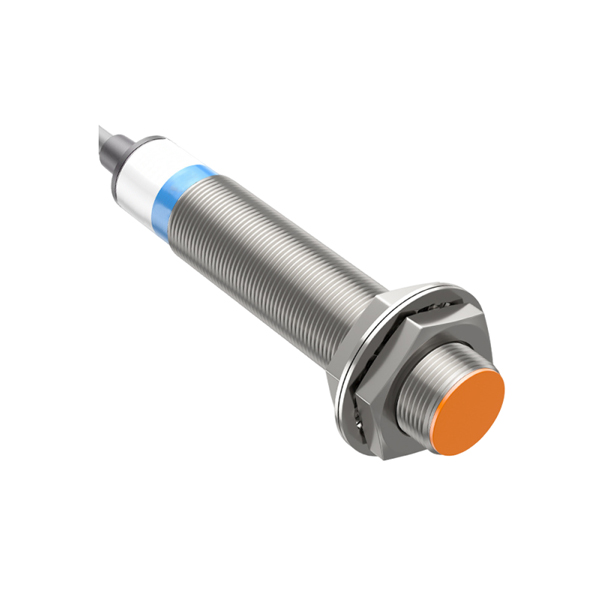
A proximity sensor is a sensor or switch that detects the presence of a target (typically a metal object) without physical contact. This type of sensor usually consists of a solid-state electronic device that is hermetically sealed to protect it from excessive vibration, liquids, chemicals, and corrosive agents. This SUCH proximity sensors can be used in applications where the object being detected is considered too small or too soft to actuate a mechanical switch.
The operating principle involves monitoring changes in the amplitude of a high-frequency electromagnetic field. Literally, “proximity switch” means ‘proximity’ refers to distance or closeness, while “switch” means a switch.
Thus, the definition is an automatic sensor or switch that detects metal based on the distance measured—that is, how close the detected object is to the sensor. Due to the nature of this sensor, it detects objects within a range of millimeters.
Generally, SUCH Sensors proximity sensors have various detection ranges, such as 5, 7, 10, 12, and 20 mm, depending on the sensor type. The larger the number specified in the model, the greater the detection range. Additionally, these sensors operate at a voltage of 10–30 Vdc, though SUCH Sensors some models also use 100–200 Vac.




Add a review